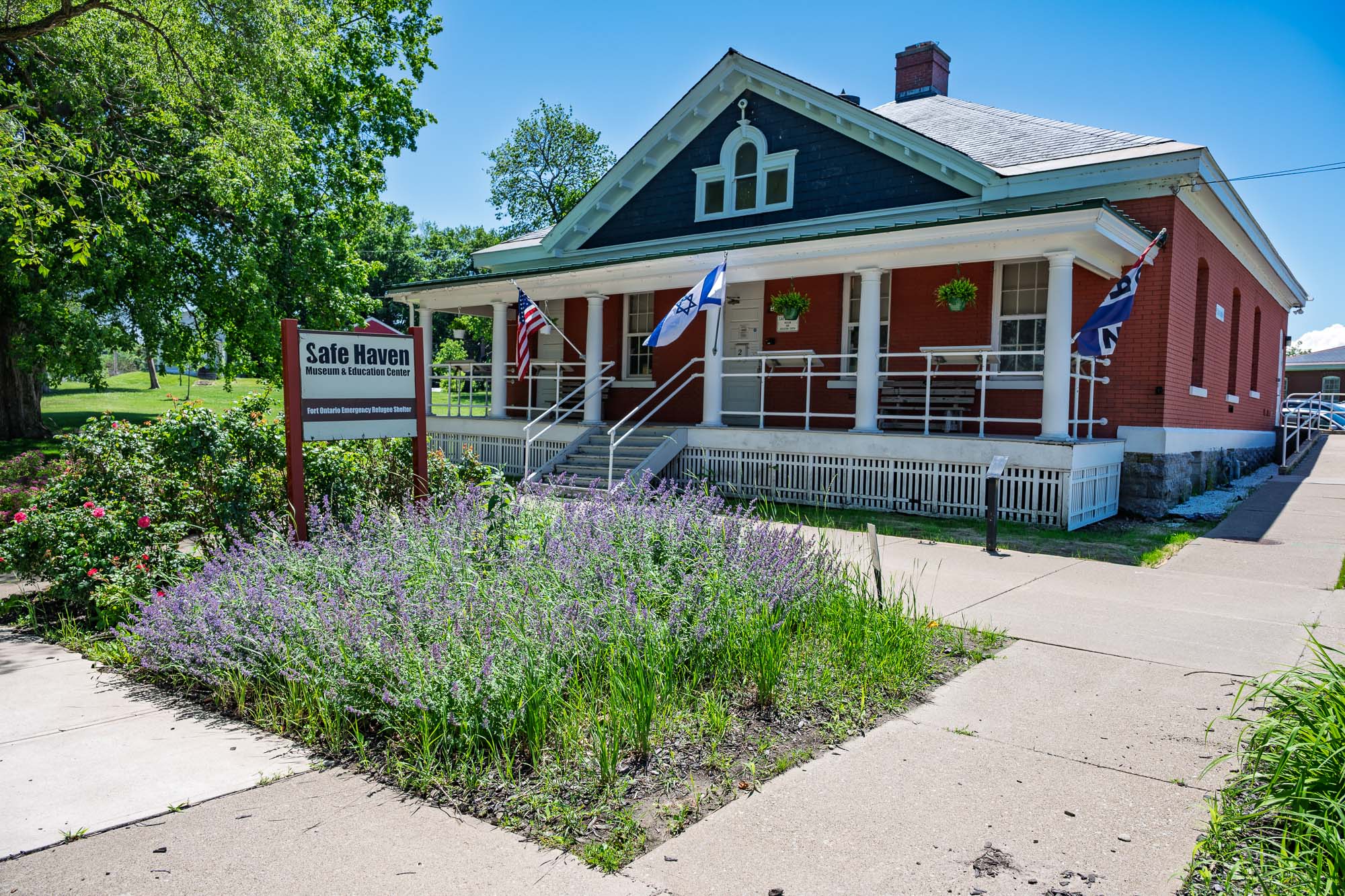
The Safe Haven Museum in Oswego, New York. Photo courtesy of Julian Vrieslander.
We visited my home county in New York in June for my great-niece’s high school graduation. We were having breakfast at a restaurant in Oswego and noticed a sign for the Safe Haven Museum. I asked the proprietor what it was, and she said, “I’m not sure, but these women [at a neighboring table] can tell you.” It turns out that this museum commemorates the resettlement of 982 European refugees during World War II. I’d heard the bare bones of the story before, but not the details. After breakfast, we drove over to see it. The museum is housed in the former administration building at Fort Ontario, a decommissioned Army base that’s now part of the New York State Park System.
In 1944, President Frankin Roosevelt wanted to bring refugees to the United States, but Congress was having none of it. He then signed an Executive Order to bring a boatload of refugees here, but each family had to sign an affidavit that they would leave the country at the end of the war. Many of the refugees were from Yugoslavia, as they could escape to Italy easier than people from other countries. The ship left Italy and landed at Ellis Island, then the refugees boarded trains to Oswego and were housed in barracks at Fort Ontario.
The first sight of Fort Ontario for the refugees wasn’t encouraging: barbed-wire fencing and lines of barracks. Fortunately, the residents were welcoming after the initial quarantine period. First Lady Eleanor Roosevelt came to visit. Children attended local schools. Musicians in the refugee camp played concerts. Any resistance to the refugees was outweighed by the friendships made with Oswego residents.
Roosevelt died in April 1945, and Germany surrendered the following month. President Harry Truman decided that the refugees should be given the option to stay in the US. The museum didn’t give his motivation for doing so. He may have been concerned about the Soviet Union’s bringing eastern Europe under its sphere of influence, or perhaps he was worried about post-war conditions on the continent. Nevertheless, he went ahead with the plan. Most refugees stayed in the US and became citizens.
Many Nazi-era refugees were sponsored by academic institutions, churches, and family members. Albert Einstein had offers from several universities but settled at the Institute of Advanced Studies at Princeton. Jewish children and “enemies of the Third Reich” were brought to America by religious groups. See the Ken Burns film, Defying the Nazis, for one story. In contrast, the Fort Ontario refugees were the only ones who were brought by the government. This story deserves to be known by more people. This is my modest effort to spread the word.
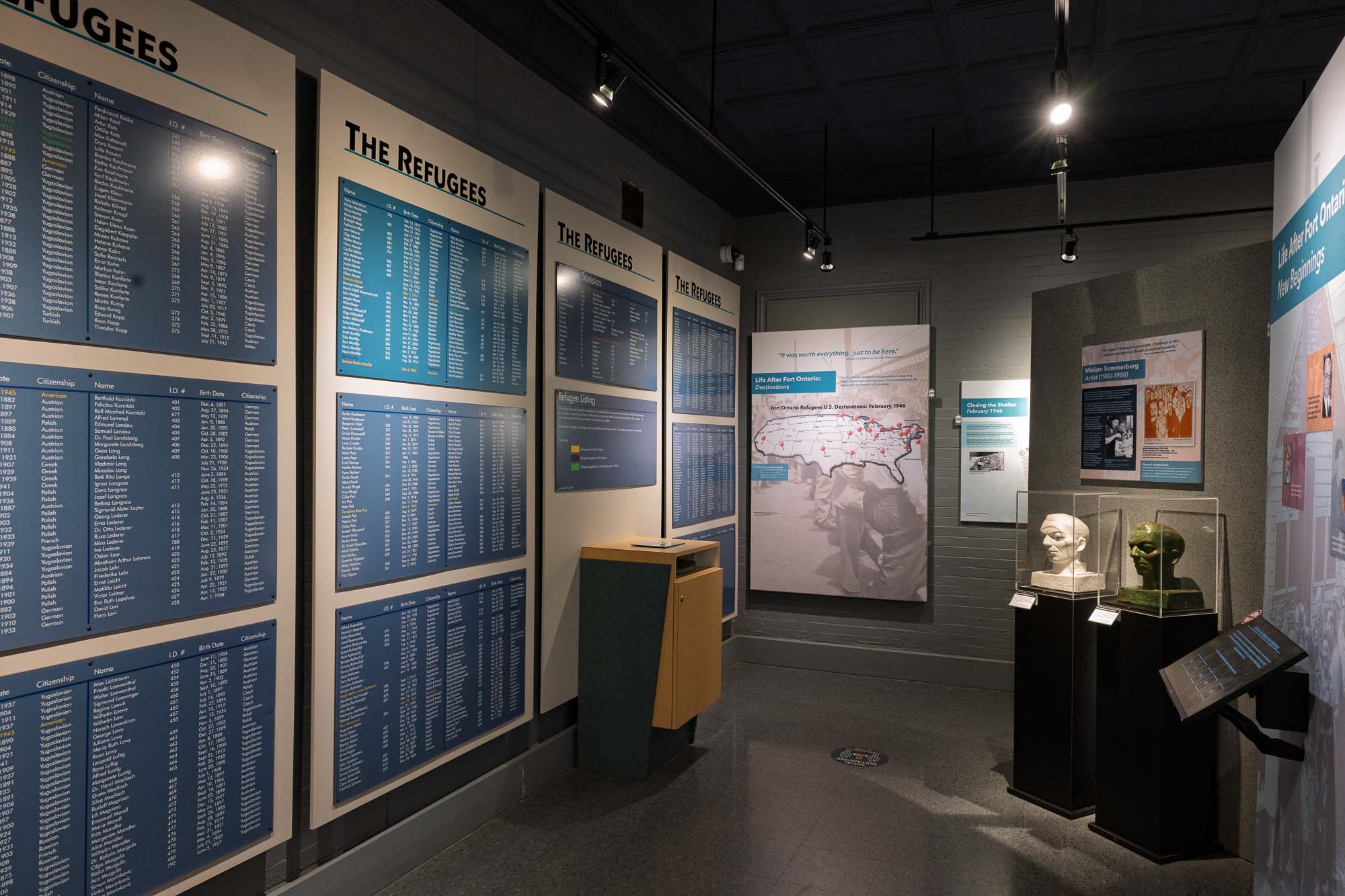
A partial list of the refugees brought to Fort Ontario in 1944. Photo courtesy of Julian Vrieslander.
Recent Comments